October 9, 20:00
Great Hall of the Conservatory
On September 18, the Grand Hall of the Moscow Conservatory resounded with some of the most famous waltzes created by the great composers.
There was no dancing planned, although it was difficult to resist the urge. After all, the waltz originally emerged from traditional Czech, French and Austrian dances based on the graceful spinning of couples. It soon became firmly established across all levels of European society. Over time, the waltz evolved into an independent instrumental concert genre, inspiring many talented composers.
The evening’s program featured some of the most famous waltzes in classical music. Several works by the “King of Waltzes,” Johann Strauss II, were performed. Having composed more than 150 waltzes, Strauss became one of the founders of the Viennese waltz, the most popular form of the genre. The program also included some of Pyotr Ilyich Tchaikovsky’s most brilliant compositions, through which the waltz acquired an entirely new dimension, becoming not merely an accompaniment to dance but an independent means of musical expression. They were joined by celebrated waltzes and symphonic works by Glinka, Gounod, Liszt, Lehár and Brahms.
The lyricism, elegance, fluidity and expressiveness of the waltz have made it extraordinarily popular around the world. There is no need to know the dance steps to appreciate the romance, energy and lightness of waltz music and simply enjoy it.
The program “The World’s Best Waltzes” was performed by the Moscow State Academic Symphony Orchestra. The concert showcased one of the many facets of this renowned ensemble: its ability to perform not only serious academic repertoire, but also light-hearted and life-affirming works that bring warmth and joy to audiences.
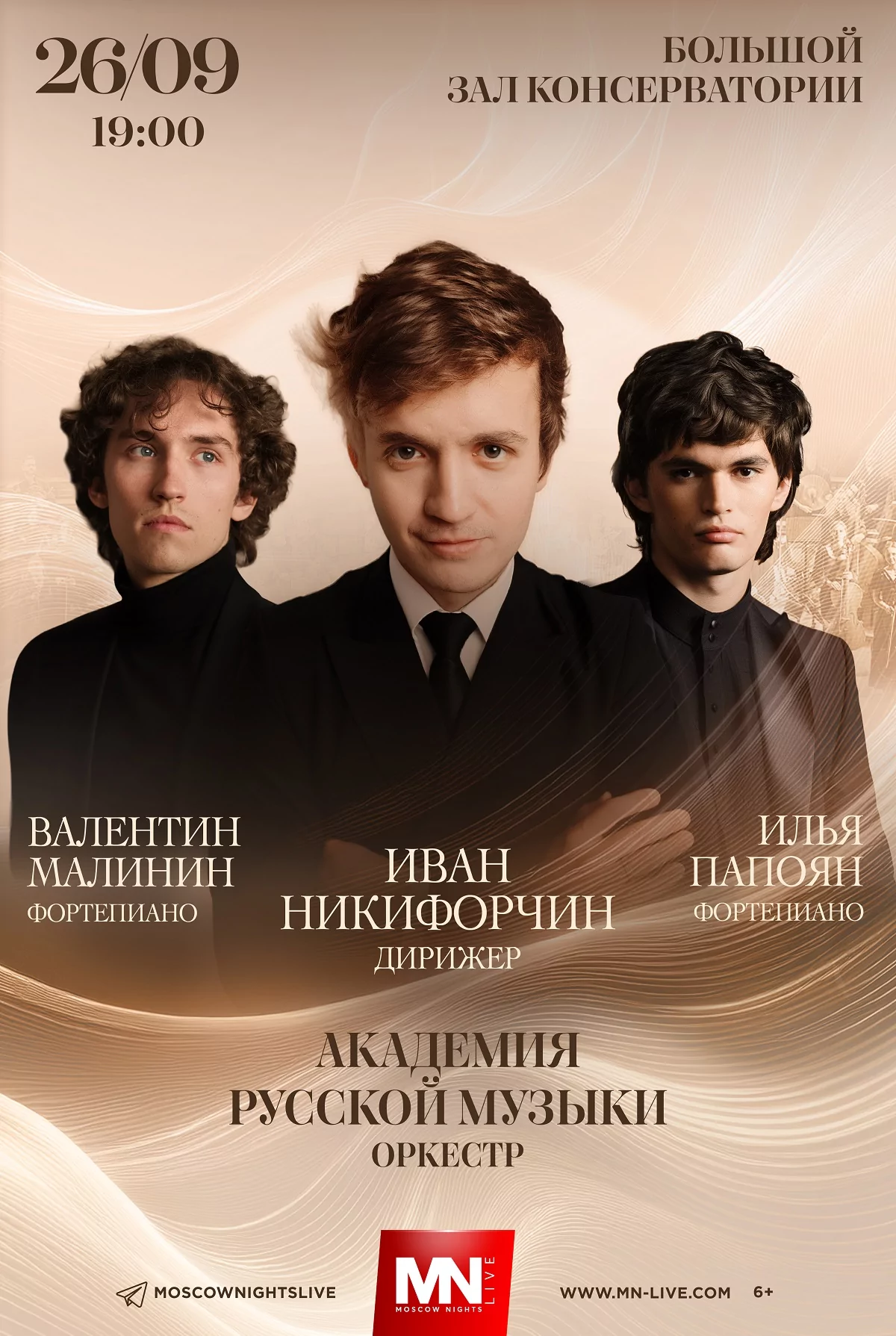
The concert was conducted by Ivan Nikiforchin. He received his academic musical education at the Moscow State Tchaikovsky Conservatory and completed postgraduate studies there. Since 2015, he has worked with the State Academic Symphony Capella of Russia. He is Artistic Director and Conductor of the Symphony Orchestra of the A. G. Schnittke Moscow State Institute of Music and also the founder, Artistic Director and Chief Conductor of the “Academy of Russian Music.” Ivan Nikiforchin performs with leading orchestral ensembles in Russia and regularly participates in international competitions, awards and festivals, achieving outstanding results.
Program
Act I
Johann Strauss II — Overture to the operetta Die Fledermaus
Charles Gounod — Waltz from the opera Faust
Franz Liszt — Mephisto Waltz No. 1, S. 514
Franz Lehár — Gold and Silver Waltz from the operetta The Merry Widow
Johann Strauss II — Voices of Spring Waltz
Johann Strauss II — The Blue Danube Waltz
Act II
Mikhail Glinka — Waltz-Fantasia
Johann Strauss II — Roses from the South Waltz
Pyotr Ilyich Tchaikovsky — Waltz from the ballet Swan Lake
Pyotr Ilyich Tchaikovsky — Waltz of the Flowers from the ballet The Nutcracker
Pyotr Ilyich Tchaikovsky — Waltz from the ballet The Sleeping Beauty
Johannes Brahms — Hungarian Dances: Nos. 1, 2, 5, 10
Great Hall of the Conservatory
Great Hall of the Conservatory
All-Russian Museum of Decorative Arts
Great Hall of the Conservatory
Great Hall of the Conservatory