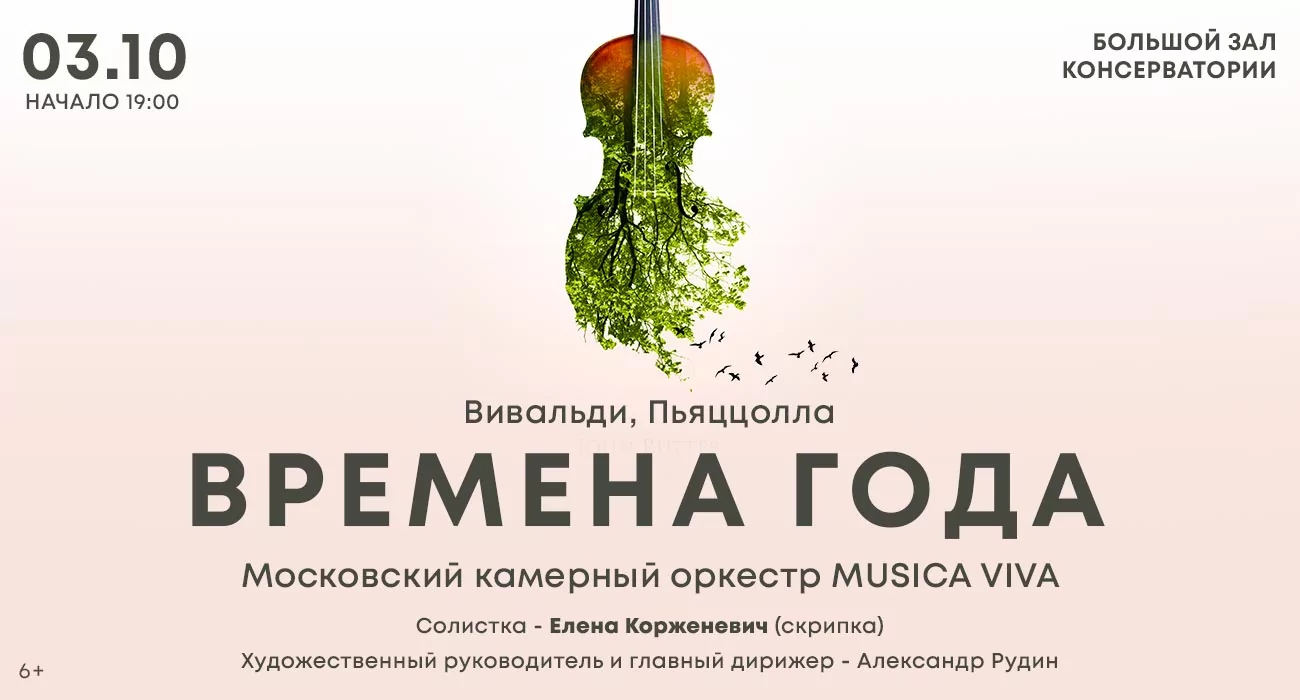

October 9, 20:00
Great Hall of the Conservatory
The theme of the changing seasons has always been popular in music. However, it was Antonio Vivaldi who first brought this idea to life by creating his famous cycle The Four Seasons. The work became not only the composer’s signature piece but also the most celebrated masterpiece of the Italian Baroque. Through his music, Vivaldi invites listeners to experience the beauty of the Italian landscape throughout the changing seasons and, in a broader human sense, the cyclical nature of life and the shifting moods that accompany different stages of our lives.
Two and a half centuries after Vivaldi, Argentine composer and “King of Tango” Astor Piazzolla created his own Four Seasons. He enriched traditional tango with elements of jazz and folk music. His composition The Four Seasons of Buenos Aires tells the story of the feelings and experiences of an ordinary person in a big city.
Between 1996 and 1998, Russian composer Leonid Desyatnikov created a relatively free violin transcription of the work, accompanied by a string orchestra. His arrangement brought the connection between Antonio Vivaldi’s and Piazzolla’s Four Seasons into sharper focus, incorporating several quotations from Vivaldi’s original cycle into each movement.
Great Hall of the Conservatory
Great Hall of the Conservatory
All-Russian Museum of Decorative Arts
Great Hall of the Conservatory
Great Hall of the Conservatory