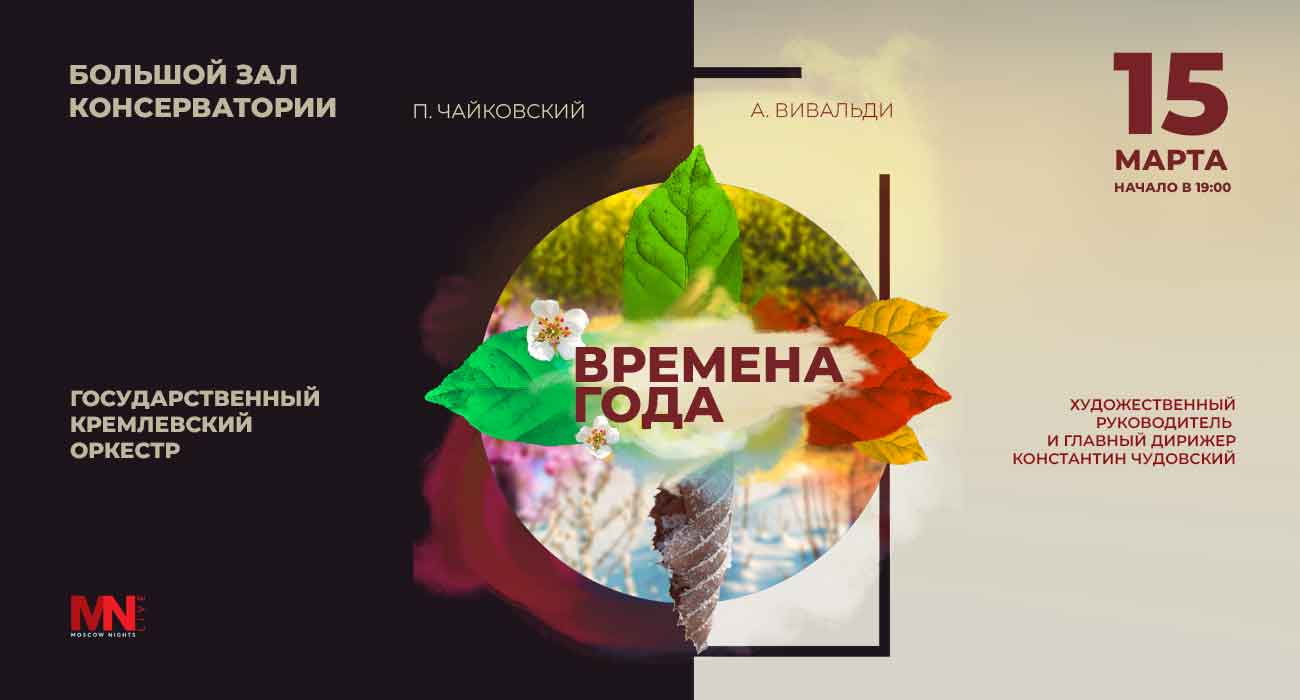
“The Seasons”. State Kremlin Orchestra
About the concert
On March 15, the Grand Hall of the Moscow Conservatory hosted a concert featuring excerpts from several legendary works devoted to the mysterious cycle of nature and its changing states. The program included Antonio Vivaldi’s celebrated Baroque masterpiece The Four Seasons, Alexander Glazunov’s ballet The Seasons, Pyotr Ilyich Tchaikovsky’s famous cycle of the same name, Ottorino Respighi’s Botticelli Triptych, as well as Tchaikovsky’s Symphony No. 1, “Winter Dreams,” and Beethoven’s Symphony No. 6, “Pastoral.” The concert was performed by the State Kremlin Orchestra, conducted by one of Russia’s most sought-after young conductors, Konstantin Chudovsky.
Vivaldi’s violin concertos The Four Seasons are among the most popular works in classical music and an undisputed hit of the concert stage. This legendary cycle of four concertos instantly captivates audiences with its musical inventiveness, vivid imagery, expressive power, and refined melodic language. The music, in which one can hear the barking of dogs, rolls of thunder, howling blizzards, the murmuring of streams, and birdsong, speaks for itself and has inspired composers across eras and genres.
No less famous is Pyotr Ilyich Tchaikovsky’s interpretation of the theme of the seasons. His piano cycle, commissioned by the publisher of a monthly music magazine, immediately captivated listeners with its distinctive musical language and intimate lyricism. The images portrayed in these piano pieces, often described as an encyclopedia of 19th-century Russian country-estate life, capture the vast landscapes of Russia and scenes of peaceful rural life.
Alexander Glazunov’s The Seasons evokes an entirely different mood. In this allegorical ballet, the composer brings to life the timeless myth of nature awakening from its winter sleep, the summer filled with sunny days, and the arrival of autumn, promising an abundant harvest. The work is filled with optimism and vibrant joy.
It is known that Vivaldi conceived the idea of expressing different states of nature through music during his travels across Italy. He envisioned his brilliant cycle while observing the living world from the window of a stagecoach and listening closely to the sounds around him. His homeland also inspired another composer, Ottorino Respighi, who is considered in Italy one of the most significant composers of instrumental music after Antonio Vivaldi. His refined Botticelli Triptych masterfully depicts three paintings by the Renaissance genius. As one critic aptly observed, the final movement, “The Birth of Venus,” in which the goddess emerges from a slowly pulsating wave, could almost “have come from Vivaldi’s pen,” so strikingly similar are the musical styles of these two great Italian composers.
Konstantin Chudovsky is a Russian conductor and laureate of the Triumph Youth Award (2011), a guest conductor of the Bolshoi Theatre, Chief Conductor of Ural Opera Ballet since 2019, and Artistic Director and Chief Conductor of the State Kremlin Orchestra since 2020. He graduated from the Gnessin State Musical College with a degree in choral conducting, studying under Professor V. A. Bogdanovskaya, and from the Moscow Tchaikovsky Conservatory, where he studied opera and symphonic conducting under Professor G. N. Rozhdestvensky. His repertoire includes more than 30 opera and ballet productions, as well as symphonic music.
Venue
Other concerts
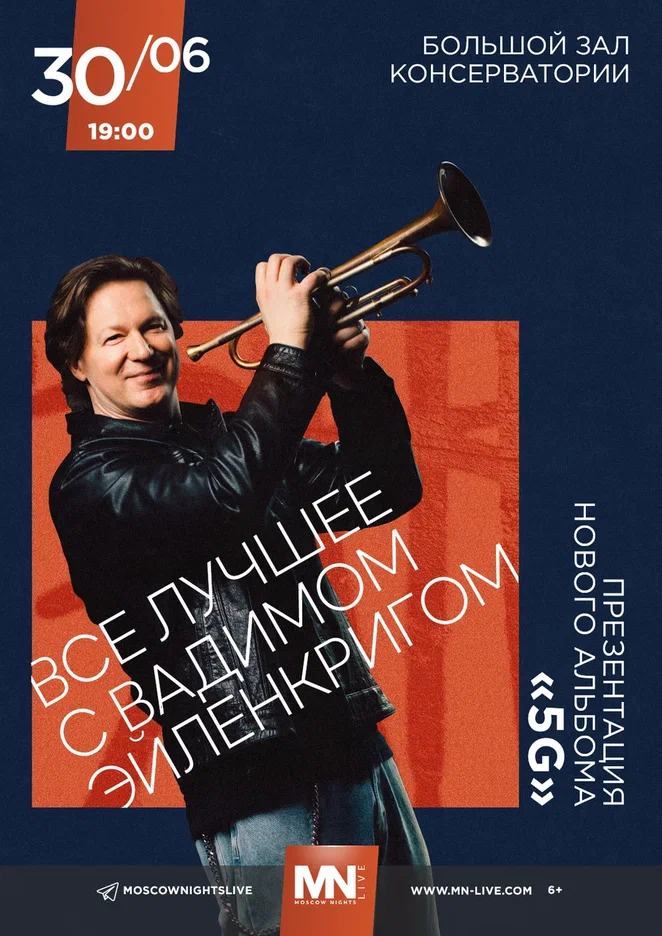
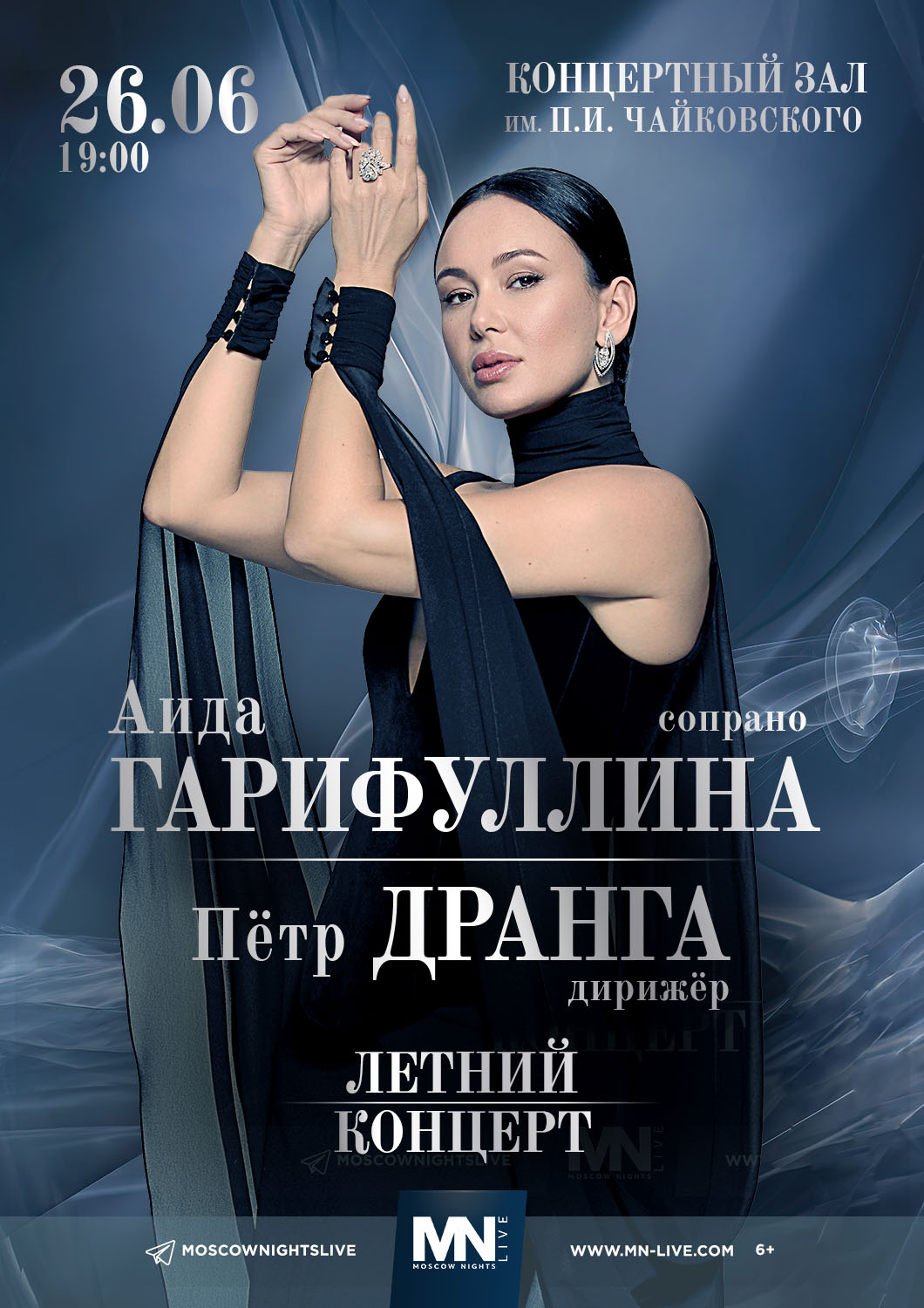

Great Hall of the Conservatory
Moscow Virtuosi on the stage of the Great Hall of the Conservatory
Great Hall of the Conservatory
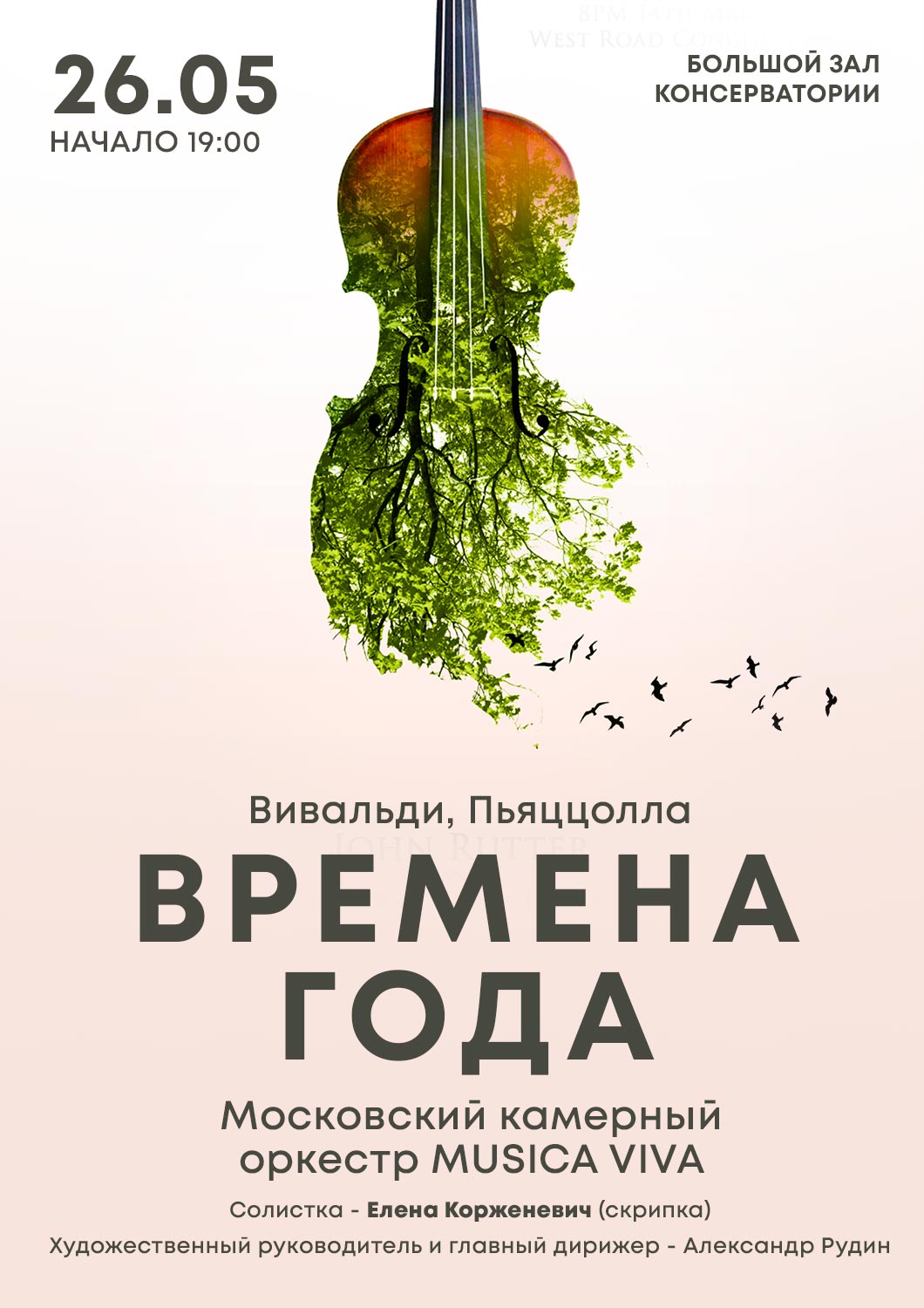
The Four Seasons: Vivaldi & Piazzolla — Musica Viva Moscow Chamber Orchestra
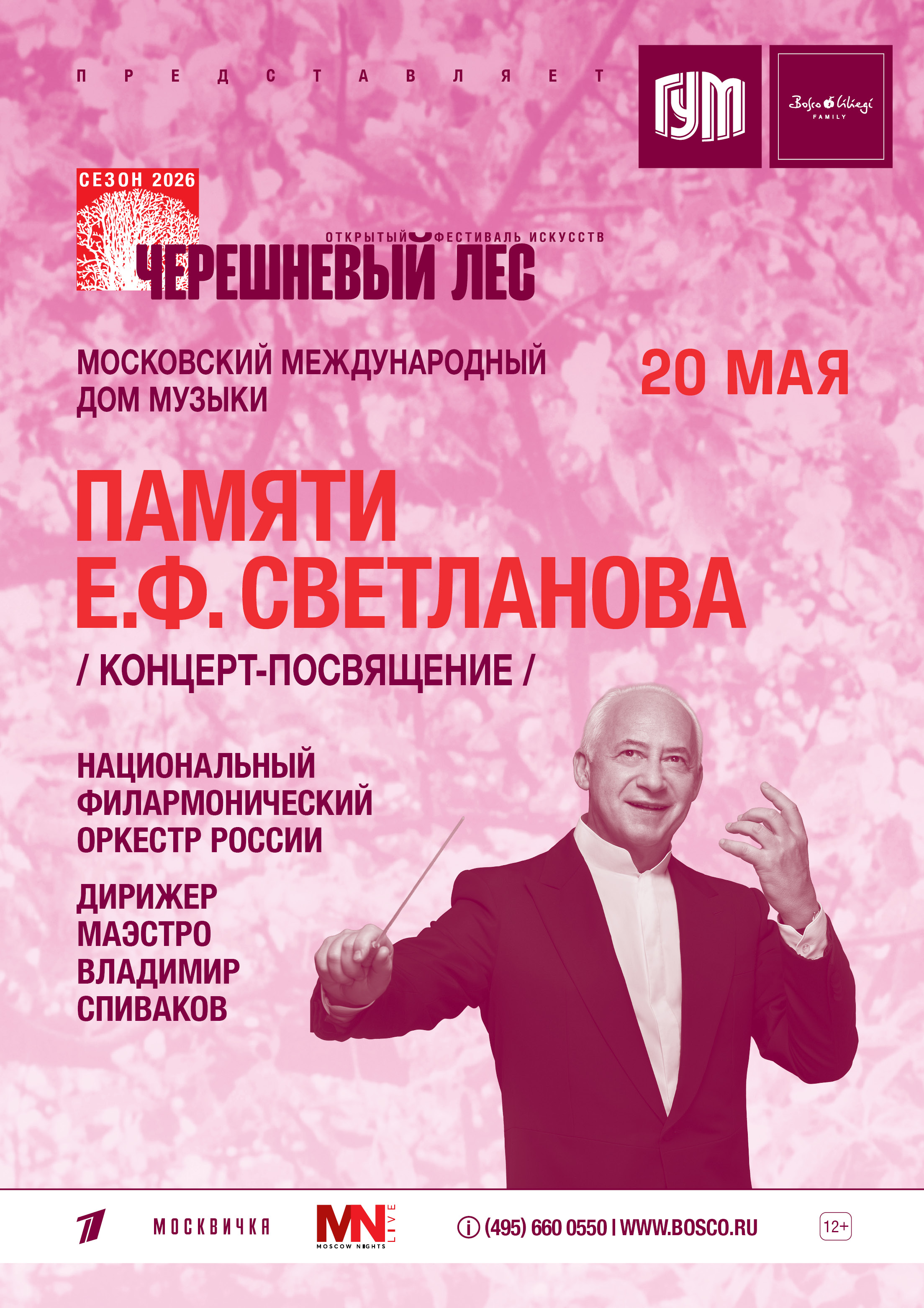


Great Hall of the Conservatory