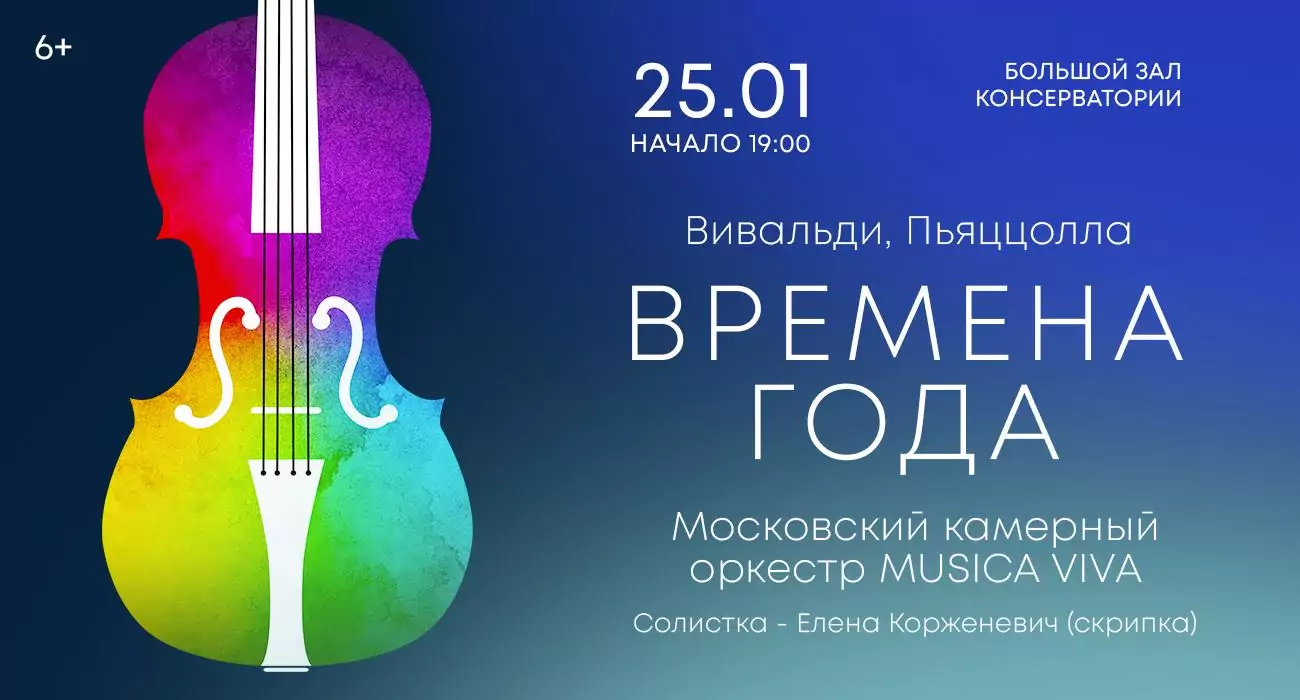
THE FOUR SEASONS: VIVALDI & PIAZZOLLA
About the concert
Program:
A. Vivaldi
The Four Seasons, Four Concertos for Violin, Strings and Basso Continuo
A. Piazzolla — L. Desyatnikov
The Four Seasons of Buenos Aires for Violin and Orchestra
The changing of the seasons has always been a popular theme in music. However, it was Antonio Vivaldi who first brought this idea to life in his celebrated cycle The Four Seasons. The work became not only the composer’s signature masterpiece, but also the most famous composition of the Italian Baroque.
In his music, Vivaldi invites listeners to experience the beauty of Italian nature throughout the changing seasons and, in a broader human sense, the cyclical nature of life and the changing moods that accompany different stages of a person’s journey. Each concerto is preceded by a sonnet written by Vivaldi himself. With humor and vivid detail, the sonnets describe the scenes depicted in the music, reflecting the pastimes and joys associated with each season.
Two and a half centuries after Vivaldi, Argentine composer and “king of tango” Astor Piazzolla created his own Four Seasons. He enriched traditional tango with elements of jazz and folk music. His composition The Four Seasons of Buenos Aires tells the story of ordinary people and their emotions in the big city.
In 1996–1998, Russian composer Leonid Desyatnikov created a free transcription of Piazzolla’s work for violin accompanied by string orchestra. He made the connection between the Four Seasons of Antonio Vivaldi and Piazzolla even more apparent by incorporating several quotations from Vivaldi’s original cycle into each movement.
Since then, the striking combination of the Baroque concerto and Argentine tango has become something of a tradition. Vivaldi’s and Piazzolla’s Four Seasons are performed together for a reason: these works, filled with ever-changing colors and moods, vivid melodies, and expressive solo parts, complement and enhance one another.
We invite you to compare the music of winter, spring, summer, and autumn in 18th-century Italy and 20th-century Buenos Aires. Guiding you on this journey through centuries and across continents will be the Moscow Chamber Orchestra Musica Viva (“living music” in Latin) — one of Russia’s leading orchestras, renowned for its distinctive artistic style and versatility in performing music of a wide range of styles and genres.
The solo violin part will be performed by Elena Korzhenevich, a young and talented violinist, laureate of international competitions and participant in major music festivals.
We invite you to the Grand Hall of the Moscow Conservatory to enjoy mesmerizing music performed by true virtuosos.
Venue
Other concerts


Great Hall of the Conservatory
Bel Suono concert in the Great Hall of the Conservatory
Great Hall of the Conservatory
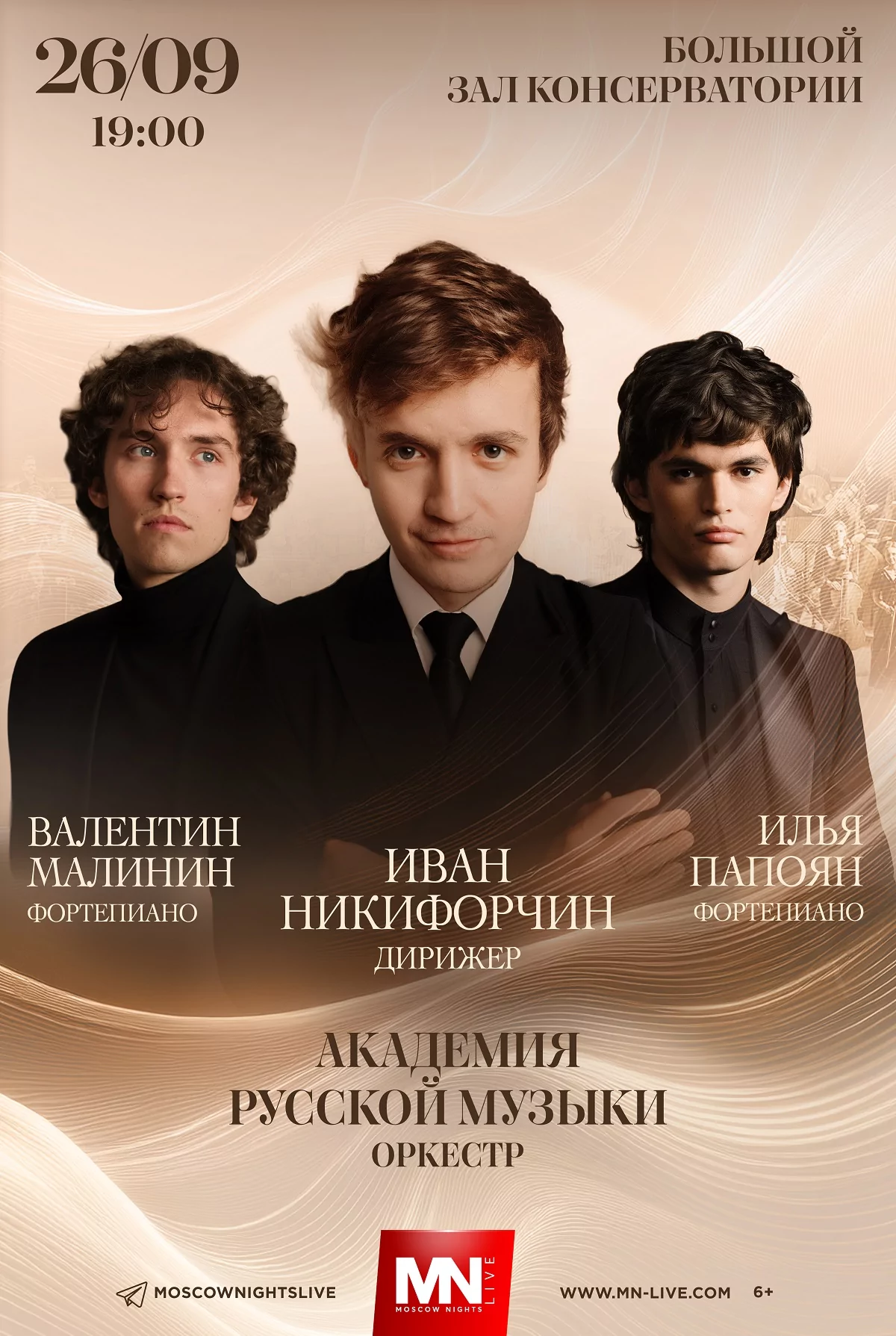
Ilya Papoyan I Valentin Malinin I Four‑Hand Concert


All-Russian Museum of Decorative Arts
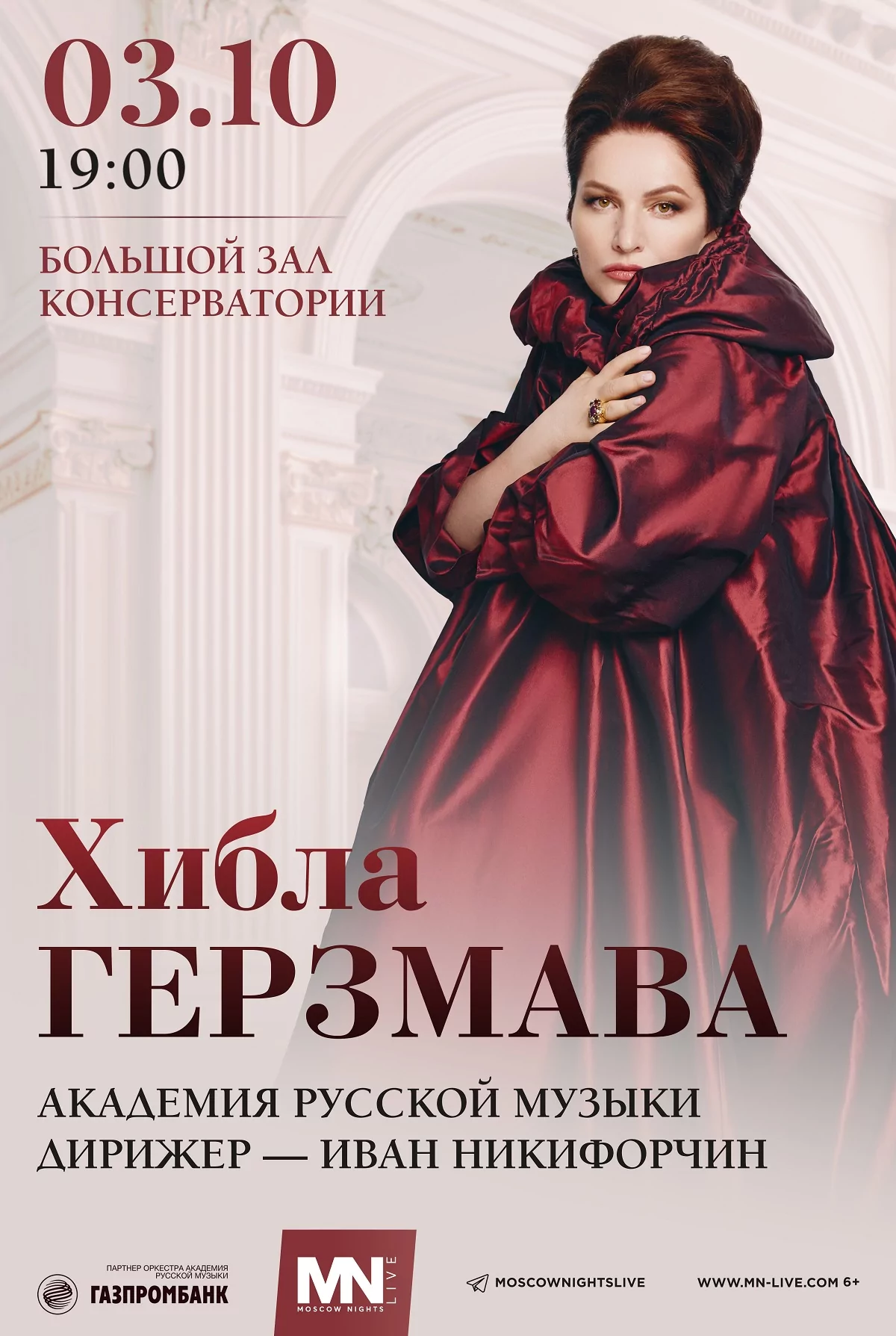
Hibla Gerzmava and the Big Jazz Orchestra conducted by Pyotr Vostokov



Great Hall of the Conservatory
Moscow Virtuosi on the stage of the Great Hall of the Conservatory

Great Hall of the Conservatory
